Your House Smells Musty but You Can’t See Mold — What Should You Do?
Musty Smell in Your House but No Mold? What to Do Next | RRMT

Smell mold but can't see it? Learn where hidden mold may develop, what causes musty odors, and when a professional mold inspection may help.
A persistent musty or earthy smell inside your home can be frustrating—especially when you can't see anything that looks like mold.
While a musty odor does not automatically prove that mold is present, it can be a reason to investigate further, particularly when the property has experienced a leak, water intrusion, elevated humidity, or previous water damage.
The problem is that moisture and mold growth aren't always located where you can see them.
Where Can Hidden Mold Develop?
Building materials can conceal moisture problems long before obvious staining or visible growth appears.
Potential areas worth investigating include:
- Behind drywall
- Under flooring
- Behind baseboards
- Under sinks and cabinets
- Around plumbing penetrations
- Inside wall cavities
- Around windows
- Above ceilings
- Near HVAC equipment
- Around supply and return registers
- Beneath carpet or padding
- Areas affected by previous roof, plumbing, or AC leaks
The U.S. EPA emphasizes that moisture control is the key to controlling indoor mold growth. When mold spores encounter sufficiently damp materials, growth can occur.
Why Does the Smell Seem Stronger in Certain Rooms?
Pay attention to where and when you notice the odor.
For example, if the smell becomes noticeably stronger when you enter one bedroom, that may help narrow the investigation to that room or an adjacent area.
If the odor becomes stronger when the HVAC system operates, the inspector may consider whether conditions around the HVAC system, registers, return pathway, or nearby building materials warrant further evaluation.
A professional inspection isn't simply about walking around looking for black spots. It should also consider the history of the property and potential moisture sources.
Start With the Moisture Source
Finding out why an area became damp is often more important than simply determining whether mold spores are present.
Potential moisture sources include:
- Plumbing leaks
- Roof leaks
- AC condensate problems
- Window or exterior water intrusion
- Shower or bathtub leaks
- Appliance leaks
- Foundation-related moisture
- Elevated indoor humidity
- Condensation
- Previous flooding
If the moisture source remains unresolved, mold problems can return even after affected materials are cleaned or replaced.
Can a Moisture Meter Find Hidden Mold?
Not exactly.
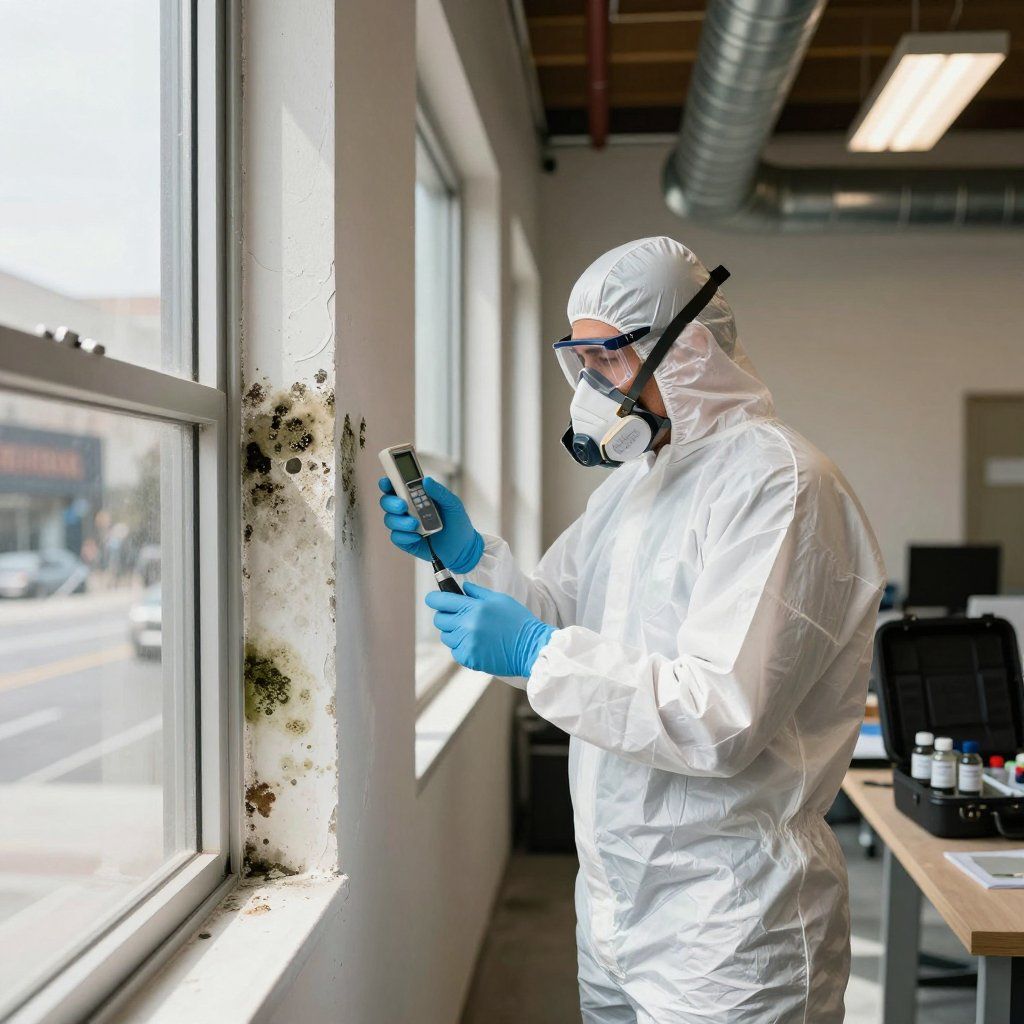
A moisture meter does not detect mold. It measures moisture conditions in or around certain building materials.
During an inspection, moisture readings can help identify areas that deserve closer investigation.
An inspector may compare readings between suspect and unaffected areas and consider those measurements alongside visual observations and the property's water-damage history.
Depending on the situation, additional investigation or sampling may be appropriate.
Should You Have the Air Tested?
Air sampling can provide additional information about airborne fungal spores at the time and location of sampling, but laboratory numbers should not be considered in isolation.
A mold assessment may include:
- Visual inspection
- Moisture measurements
- Identification of potential moisture sources
- Air samples
- Surface samples
- Wall-cavity samples when appropriate
- Outdoor comparison samples
The appropriate approach depends on the property and the reason for the inspection.
What If the Mold Test Comes Back “Normal”?
A laboratory result is one piece of evidence.
An air sample represents conditions at a particular location during a particular sampling period. Hidden moisture or localized growth may require additional investigation even when one sample does not show an unusual airborne condition.
This is why Rapid Response Mold Testing evaluates laboratory findings together with observations, moisture conditions, sampling locations, and the history of the property.
When Should You Consider a Professional Mold Inspection?
Consider having the property evaluated when:
- A musty odor persists
- There has been a recent or previous water leak
- Water staining keeps returning
- Building materials remain damp
- You suspect moisture behind a wall or floor
- There has been an HVAC condensate leak
- You're purchasing a property with a history of water damage
- Mold was previously remediated and you want independent verification
Don't Just Cover the Problem
Painting over staining or applying a deodorizer may make an area look or smell better temporarily, but it does not address an underlying moisture problem.
The first objective should be identifying and correcting the source of moisture.
Schedule an Independent Mold Inspection
If your property smells musty but you can't locate the source, Rapid Response Mold Testing can evaluate the property for potential moisture and mold conditions.
RRMT provides professional mold inspection and testing services in the Los Angeles and Houston metropolitan areas.
Our focus is inspection, testing, documentation, and helping clients understand what the findings mean.
Contact Rapid Response Mold Testing today to schedule an inspection.
Frequently Asked Questions
Can you have mold without seeing it?
Yes. Moisture problems and mold growth can sometimes occur in concealed building areas.
Does a musty smell always mean mold?
No. An odor alone cannot establish that mold is present, but a persistent musty odor can justify investigating for moisture or other building conditions.
Can mold grow behind drywall?
Yes. Drywall and other building materials can support mold growth when sufficient moisture is present.
Will mold go away when a leak dries?
Stopping the water source is essential, but existing contaminated material does not necessarily disappear simply because the area becomes dry.
Can RRMT test areas where mold isn't visible?
Yes. The appropriate inspection and sampling strategy depends on the property and suspected source.