September 28, 2026
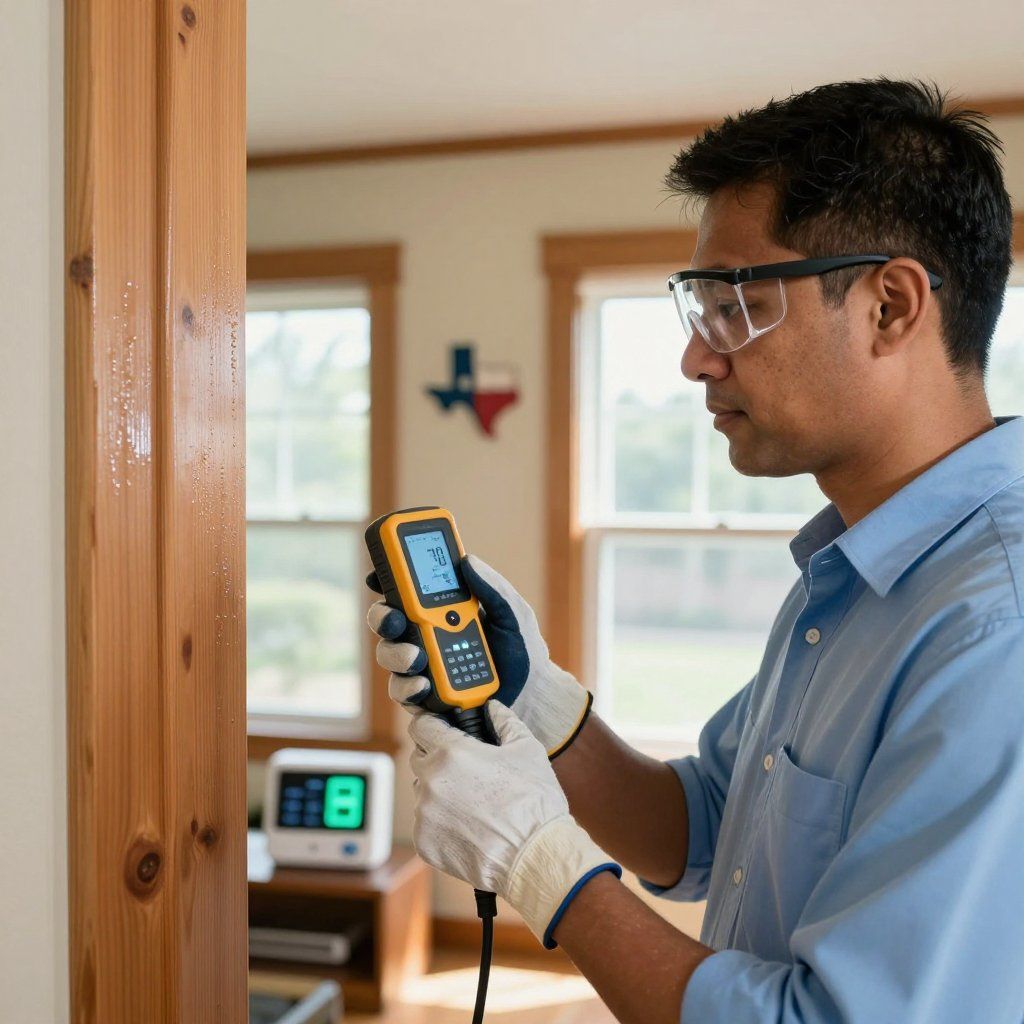
Had an AC or condensate leak in Houston? Learn what should be checked for moisture and mold before walls and ceilings are repaired. Air conditioning is essential in Houston, but an AC condensate leak can create another problem that homeowners sometimes discover too late: hidden moisture inside ceilings, walls, flooring, or HVAC-adjacent building materials. Repairing the air conditioner or clearing the condensate drain solves the source of the leak—but that doesn't automatically tell you what happened to the materials that became wet. Before damaged areas are closed, painted, or reconstructed, it may be worth determining whether moisture remains and whether additional mold assessment is appropriate. Why AC Condensate Leaks Can Become Mold Problems Air conditioners remove moisture from indoor air. That water normally drains through the condensate system. Problems can develop when: A condensate line becomes clogged A drain pan overflows A drain line becomes disconnected The air handler leaks Insulation around HVAC components becomes wet Condensation develops around poorly insulated components Water may then migrate into surrounding ceilings, drywall, insulation, framing, flooring, or wall cavities. EPA guidance recommends drying wet or damp materials quickly—generally within 24 to 48 hours—to reduce the opportunity for mold growth. “The AC Is Fixed.” Is the Problem Over? Not necessarily. Repairing the AC addresses the source . You may still need to evaluate the affected building materials . Think of these as two separate questions: Question 1: Why was water entering the building? Question 2: What happened to the materials that got wet? Both matter. Areas Worth Checking After an AC Leak Depending on where the leak occurred, an inspection may consider: Ceiling drywall Wall surfaces Wall cavities Baseboards Flooring Carpet and padding HVAC closets Supply registers Return-air areas Air-handler surroundings Accessible duct or plenum areas Insulation Adjacent rooms Water does not always remain directly underneath the original leak. It can migrate along framing, drywall, flooring, and other materials. Why You Should Be Careful About Closing the Wall Too Quickly Once reconstruction begins, previously accessible materials may become concealed again. Installing new drywall over a wall cavity that still contains excessive moisture can make future investigation more difficult. Before reconstruction, it can be useful to confirm that the water source has been corrected and evaluate whether affected materials have adequately dried. What Does a Mold Inspection After an AC Leak Include? The scope depends on the property, but a professional assessment may involve: Visual Inspection The inspector looks for water staining, deterioration, suspected growth, damaged materials, condensation, and other evidence of moisture. Moisture Measurements Moisture readings can help identify materials that may still be wet or warrant further investigation. HVAC-Related Observations When relevant and accessible, areas around the air handler, registers, return pathway, and other HVAC components may be evaluated. Mold Sampling Depending on the conditions and purpose of the inspection, air, surface, or other targeted samples may be collected. Samples are then analyzed by a laboratory and interpreted together with the inspection findings. What If There Is No Visible Mold? Visible mold is not the only reason to investigate after water damage. You may have: Elevated moisture Concealed water damage A persistent odor Staining Deteriorated materials Conditions inside inaccessible spaces The absence of visible mold on the finished side of drywall does not establish what is happening behind it. Houston's Climate Makes Moisture Management Especially Important Houston properties routinely operate air-conditioning systems for long periods, making proper drainage, humidity management, and moisture control particularly important. EPA recommends keeping indoor relative humidity below 60 percent when possible, ideally around 30–50 percent. That doesn't mean every Houston home with higher humidity has mold. It means moisture conditions deserve attention when evaluating the potential for indoor mold growth. Should You Test Before Remediation? The correct approach depends on the extent and circumstances of the project. In Texas, professional mold assessment and remediation are regulated activities under state law when applicable requirements are triggered. A licensed mold assessment professional can determine an appropriate assessment scope and, when required, prepare a remediation protocol. What About After Remediation? Don't confuse remediation with verification. A post-remediation assessment evaluates whether the remediation project has met the applicable clearance criteria. For regulated Texas mold remediation projects, specific state requirements apply to assessment, remediation, post-remediation assessment, and certification. Schedule a Houston Mold Assessment If your Houston-area home, apartment, condo, or commercial property recently experienced an AC condensate leak, Rapid Response Mold Testing can evaluate the affected areas before you move forward with repairs or reconstruction. Our assessment can help identify: Areas of concern Moisture conditions Appropriate sampling locations Laboratory findings Potential next steps Contact Rapid Response Mold Testing to schedule a Houston mold inspection and assessment. Frequently Asked Questions Can an AC leak cause mold? Yes. Persistent moisture from an AC or condensate leak can create conditions that support mold growth. How quickly can mold develop after water damage? EPA recommends drying wet materials within approximately 24–48 hours to reduce the potential for mold growth. Should I replace drywall after an AC leak? That depends on the extent of water exposure, material condition, contamination, and moisture status. Inspection can help determine whether additional action is warranted. Can you inspect around HVAC registers? Accessible HVAC-related areas can be included when relevant to the assessment. Does fixing the AC mean the mold problem is solved? It corrects the moisture source if the repair is successful, but affected building materials may still require evaluation.